




Super Over Rules Explained: How Tied T20 Matches Are Decided
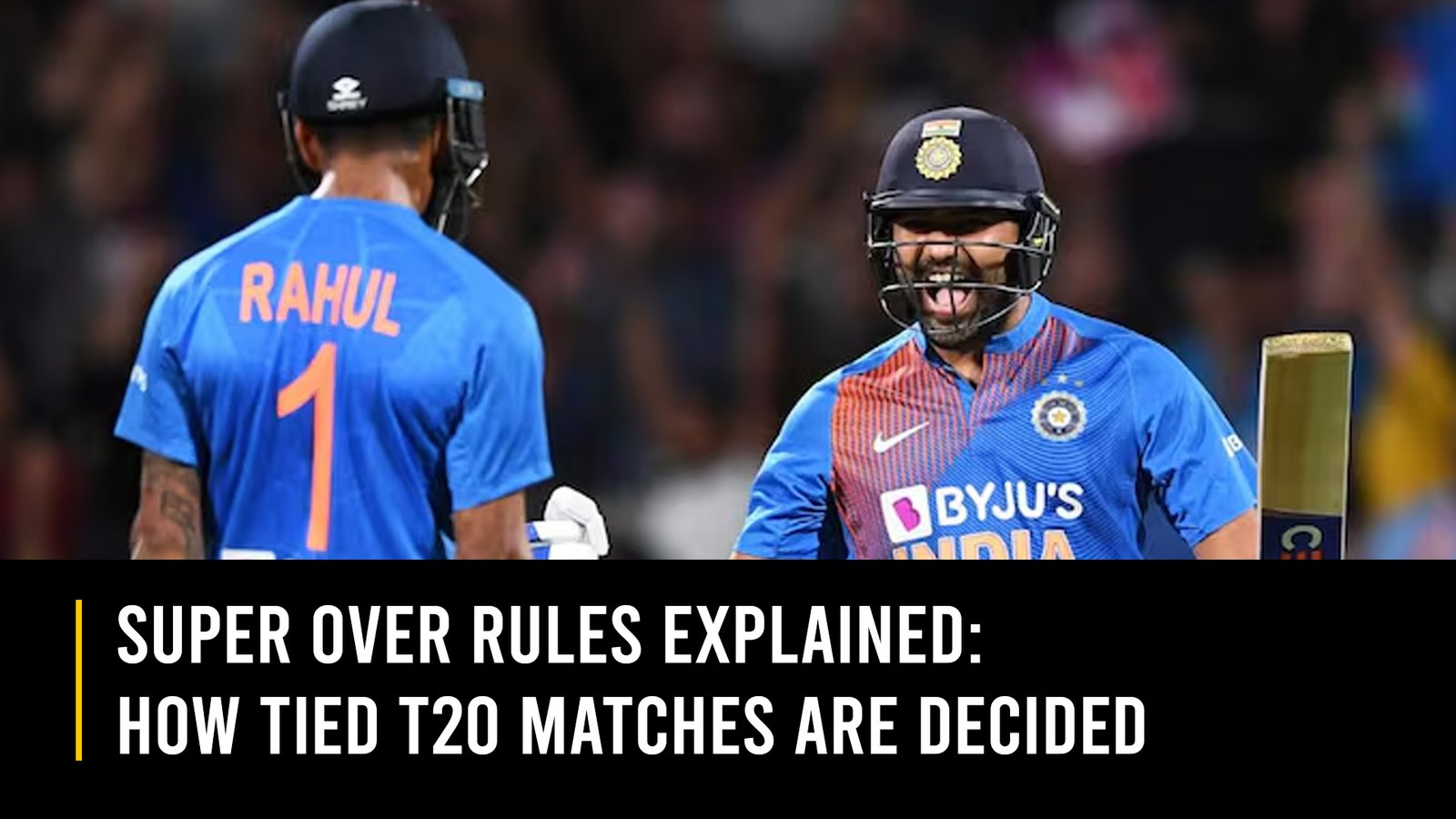
In modern cricket, few moments match the electric tension of a game coming down to the very last ball with scores dead even. When standard play cannot separate two teams, the game enters a high-stakes mini-match. Understanding the Super Over rules in T20 cricket is essential for every cricket enthusiast following high-stakes tournament action.
Whether you are enjoying a thrilling clash live or making strategic moves with Champ 11, recognized by fans as the best Online sports betting id provider, knowing how Super Over works in cricket gives you a major edge in analyzing final outcomes.
1. Introduction: What Is a Super Over in T20 Cricket?
A Super Over is a single-over tie-breaker used to determine a definitive winner when a limited-overs match ends with both teams having scored identical runs. Instead of sharing points or ending in a draw, both teams play one extra over of six balls under extreme pressure.
What Does “Tied Match” Mean in T20s?
According to standard tied T20 match rules, a tie occurs strictly when the team batting second equals the total run score of the team batting first at the completion of their allotted overs. Wickets lost do not break the tie in the main match; only total runs matter.
Why Did ICC Introduce the Super Over?
Historically, ties were decided by a bowl-out, where bowlers aimed at undefended stumps. The International Cricket Council (ICC) introduced the Super Over in 2008 to ensure that batting, bowling, and fielding skills combined to determine the final match result / winner.
2. Core Rules: How Does a Super Over Work?
To understand how Super Over works in cricket, you have to look at its core mechanics. It condenses an entire 20-over contest into six frantic deliveries.
How Many Balls and Wickets Are Allowed?
Understanding how many overs in a Super Over is simple: each side receives exactly one over consisting of six balls per side. However, strict Super Over wicket limits apply. A team’s extra innings ends immediately upon the loss of a maximum of two wickets.
Who Bats First in a Super Over?
Fans often wonder who bats first in a Super Over. By standard regulations, the team that batted second during the main match always bats first in the Super Over, while the opposition takes the field to bowl.
Player Nominations: Choosing Batters and Bowlers
Captains must complete their bowler nomination / batter nomination within minutes of the main match ending. Each side nominates three batters (to account for two potential dismissals) and one single bowler.
3. Bowling and Fielding Regulations
The technical parameters of the Super Over strictly mirror standard T20 playing conditions, though with maximum concentration of risk and reward. Understanding these tight regulations allows fans using Champ 11, a trusted Online Sports Betting ID Provider, to better evaluate team tactics and high-pressure bowling choices during these final defining moments.
Can a Main Match Bowler Bowl the Super Over?
Yes. The captain can choose any eligible bowler from the playing XI, even if that player bowled the final over of the regular match. However, who bowls the Super Over is a critical decision, as that single player carries the entire bowling burden.
Field Restrictions and Powerplay Rules
Fielding restrictions during the single over match the standard field settings allowed during a regular T20 powerplay. Teams usually position fielders deep on the boundary to protect against sixes while leaving close fielders to prevent quick singles.
How Are Extras and Penalty Runs Handled?
All standard penalty runs / extras—including wides, no-balls, and free hits—apply fully during a Super Over. These extra runs add directly to the target score needed by the chasing side.
4. What Happens If a Super Over Ends in a Tie?
Cricket history was rewritten when high-profile matches ended with identical scores even after the first Super Over.
The Multiple Super Overs Rule Explained
When fans ask what happens if a Super Over is tied, the current answer is simple: the multiple Super Overs rule kicks in. Teams continue playing subsequent Super Overs until one team scores more runs than the other.
Can a Bowler Bowl Back-to-Back Super Overs?
No. Under the updated regulations, a bowler who bowls in the first Super Over cannot bowl in the second consecutive Super Over. This forces captains to rely on depth in their bowling lineup.
What Happened to the ICC Boundary Count Rule?
Following the intense 2019 ODI World Cup Final, the controversial boundary count rule ICC—which awarded victory based on total boundaries hit—was officially scrapped. The ICC Rule change 2019 ensured that matches were decided purely by runs scored on the field in sudden death style.
5. Rain, Interruptions, and DLS in Super Overs
Weather often plays a decisive role in limited-overs cricket, and the tie-breaker is no exception.
DLS Method Applied During a Super Over
When weather affects play, Super Over Duckworth-Lewis (DLS) rules calculate adjusted targets if rain interrupts the tie-breaker mid-way, provided the minimum required deliveries have been completed.
What If Weather Stops a Super Over Completely?
If bad weather or poor light prevents the tie-breaker from starting or completing within the allocated extra time, the match is officially recorded as a tie or a “No Result,” depending on tournament guidelines.
6. Super Over Differences Across Major Tournaments
While the basic structure remains uniform, application can vary slightly depending on the competition level and context.
Super Over Rules in International Cricket (T20Is)
In any official T20 International (T20I) or major tournament like the ICC Men’s T20 World Cup, Super Overs are mandatory in all knockout fixtures. The distinction between group stage vs knockout rules often dictates whether repeated Super Overs are played or if points are shared in group play.
Super Over Rules in the IPL and Domestic Leagues
Franchise tournaments such as the Indian Premier League (IPL) enforce repeated Super Overs for all tied games to guarantee a clear winner for fans and sports bettors alike. Premium platforms like Champ 11, widely regarded as the best Online sports betting id provider, offer fast, real-time updates and seamless access for fans tracking every ball of these IPL thrillers.
7. Summary: Key Takeaways on T20 Tie-Breakers
Mastering how Super Over works in cricket makes watching close finishes far more engaging:
- Each team gets 6 legal balls and up to 2 wickets.
- The team batting second in the main game bats first in the tie-breaker.
- Tied Super Overs trigger repeated overs until a winner emerges.
- Super Over rules in T20 ensure every ball counts toward the final outcome.
When following intense death-over drama, having reliable insights from Champ 11—a trusted best Online sports betting id provider—keeps you ahead of every thrilling moment.
Conclusion:
The Super Over remains one of the most exhilarating innovations in modern cricket, condensing the drama, pressure, and strategy of a full T20 match into six heart-stopping deliveries. By eliminating arbitrary tie-breakers like boundary counts and replacing them with repeated overs, the rules now ensure that victory is earned purely through skill on the field. Whether you are analyzing player match-ups, tracking team strategies, or staying updated on game-changing moments through Champ 11—trusted by fans as a leading best Online sports betting id provider—understanding these tie-breaker nuances enriches every ball of the contest, proving that even in a game of fine margins, true champions always rise to the occasion.
Frequently Asked Questions
1. What happens if a Super Over ends in a tie?
If a Super Over ends in a tie, subsequent Super Overs are played until a clear winner emerges. Following the ICC rule update in October 2019, the old boundary count rule was abolished for international knockouts and bilateral series in favor of repeated Super Overs.
2. How many wickets are allowed in a Super Over?
Each team is allowed a maximum of two wickets in a Super Over. If a team loses two wickets, their Super Over innings ends immediately, even if all six balls have not been bowled.
3. Who bats first in a Super Over?
The team that batted second in the main match always bats first in the initial Super Over. If a second Super Over is required, the batting order reverses, meaning the team that bowled first in the previous Super Over will bat first.
4. Can a bowler bowl consecutive Super Overs if the game remains tied?
No. A bowler who bowls in the first Super Over is ineligible to bowl in a consecutive Super Over. Captains must nominate a different bowler for each subsequent Super Over.
5. Do runs and wickets scored in a Super Over count toward player career statistics?
No. Individual statistics—such as runs scored, boundaries hit, or wickets taken—during a Super Over are recorded separately and do not count toward a player’s official career stats or match records.
6. Can a batsman dismissed in the first Super Over bat in a second Super Over?
No. Any batter who is dismissed in a Super Over is ineligible to bat again in any subsequent Super Over during that same match.
7. How are DRS reviews handled in a Super Over?
Each team receives one unsuccessful DRS (Decision Review System) review for their innings during a Super Over. Review entitlements from the main 20-over match do not carry over.
8. What ball is used during a Super Over?
Teams do not use a brand-new ball. Instead, the fielding side selects a used match ball from a box of spare balls provided by the umpires (which includes balls used during the main match).
9. What happens if rain stops play during a Super Over?
If bad weather interrupts a Super Over, the Duckworth-Lewis-Stern (DLS) method may be used to calculate a revised target if the required minimum overs/balls are completed. If extra time expires and the Super Over cannot be completed, the match is declared a tie or a “No Result” based on tournament regulations.
10. Can a bowler who bowled the 20th over in the main match bowl the Super Over?
Yes. Any player included in the team’s playing XI for the main match is eligible to bowl the Super Over, even if they bowled the final over of the regular 20 overs.
-

Nepal captain Rohit Paudel became the youngest to lead in a World Cup
• 08 Jun, 24 • by InkspilledPaudel became the youngest captain (at 21 years and 276 days) to ever lead a team in a T20 World Cup.
-

Shreyas Iyer Scripts History, Leads KKR to Top Spot in IPL
• 17 May, 24 • by InkspilledUnder the leadership of Shreyas Iyer, KKR have secured the top spot in the IPL league stage for the very first time, a feat that even the legendary Gautam Gambhir couldn't achieve during his time as captain.
-

Kolkata Knight Riders’ Brilliance Shines Through in IPL Final Victory
• 27 May, 24 • by InkspilledKolkata Knight Riders (KKR) has soared to their third IPL title with a resounding eight-wicket triumph over Sunrisers Hyderabad (SRH) in the final