

Pakistan Eye Big Changes for Lord’s After Headingley Humbling
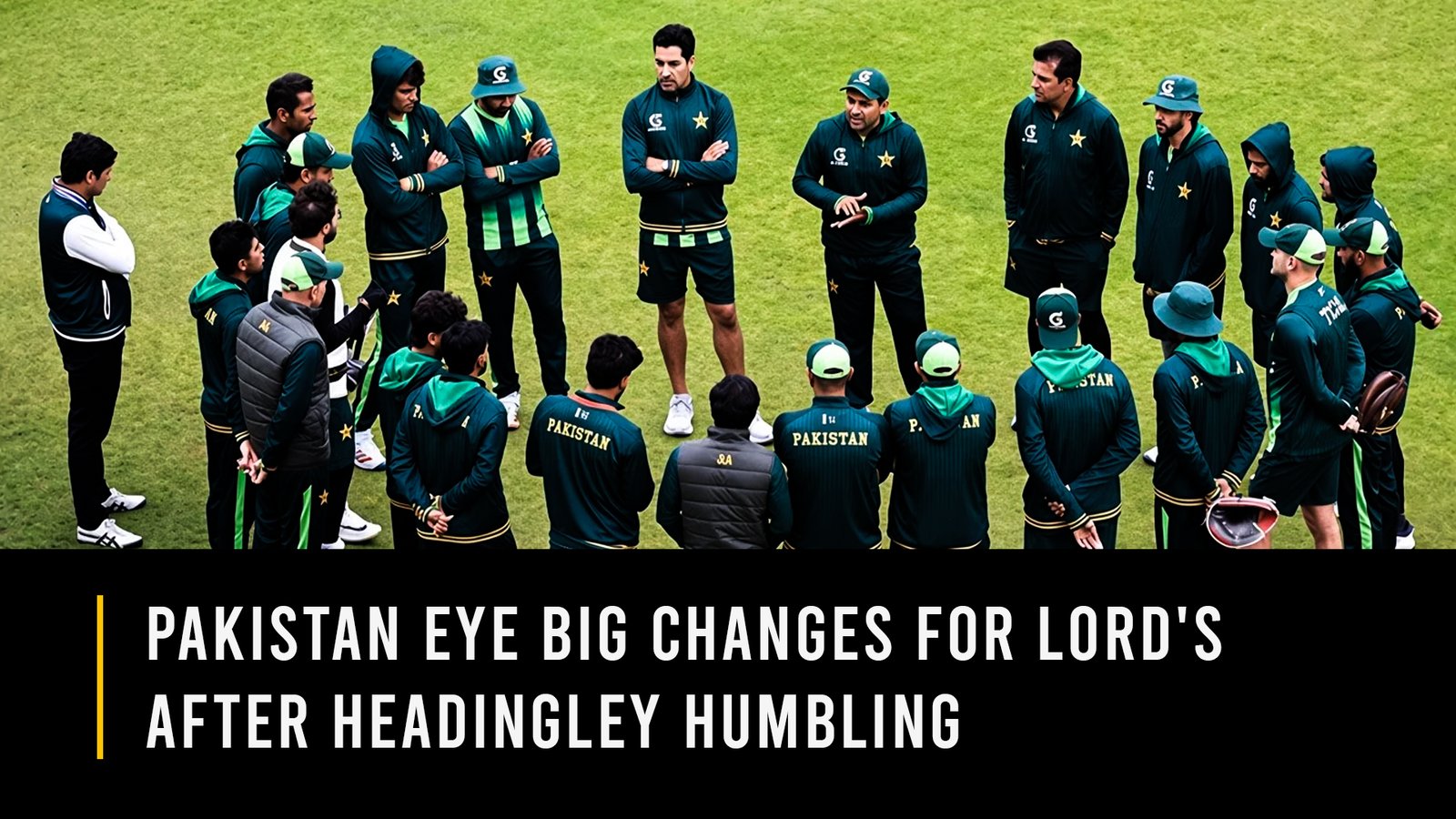
Pakistan’s tour of England has started about as badly as it possibly could. An innings and 120 run defeat at Headingley is not the kind of scoreline any touring side wants attached to its name, and it has left the camp scrambling for answers before the second Test at Lord’s begins on August 27. The team was bowled out for just 118 in the second innings after conceding a massive 238 run first innings lead, and the fallout has already started shaping selection talk for the next match.
Stand in captain Salman Ali Agha did not hide from the result either. He admitted openly that England outplayed his side and pointed to repeated errors as the reason the game slipped away so quickly. For a squad still trying to find its footing in English conditions, that kind of honesty is a start, but it will take more than words to turn things around at Lord’s.
What Went Wrong at Headingley
Pakistan’s problems at Headingley were not limited to one department. The batting collapsed twice, the seam attack could not consistently trouble England’s top order, and the fielding let the side down at moments that mattered. For fans following sport betting in exchange markets, the early signs of Pakistan’s struggles were particularly significant, as England quickly gained control of both the batting and bowling phases. Agha specifically flagged the inexperience running through the batting lineup and the bowlers’ inability to cash in on the early moisture in the pitch, a condition that usually rewards disciplined seam bowling.
There was a silver lining though. Debutant left arm spinner Ali Usman picked up a five wicket haul, a rare bright spot in an otherwise forgettable Test. Abdullah Shafique also drew praise for his application at the crease. But one good spell and one solid knock cannot paper over a defeat this heavy, and the team management knows it.
The Batting Concerns
The middle order looked shaky for long stretches, and without senior batters to anchor the innings, Pakistan’s lineup folded under pressure twice in four days. This is exactly the kind of issue a returning senior player can help settle, which brings us to the biggest selection talking point heading into Lord’s.
The Bowling Balance
Pakistan’s seamers were expected to be a strength on English soil, yet they struggled to build sustained pressure. That has opened the door for a rethink on the bowling combination, with spin suddenly looking like a more attractive option than anyone expected before the series started.
The Changes Being Considered for Lord’s
According to multiple reports, Pakistan’s team management is weighing several changes to the XI, with a final call expected only after assessing conditions in London closer to the match. Here is what is on the table right now.
- Babar Azam’s return: The former captain missed the Headingley Test due to a hand injury, and his recovery in time for Lord’s would be a major boost. If he comes in, top order batter Azan Awais is likely to make way.
- Mohammad Rizwan could be rested: The wicketkeeper batter is reportedly among those who might sit out the second Test, though nothing is final yet.
- Two specialist spinners: With dry weather expected and a Lord’s surface that has been relatively flat in recent seasons, Pakistan are considering playing two frontline spinners, likely bringing Sajid Khan into the mix alongside Ali Usman.
- Ubaid Shah in contention: The right arm pacer’s extra pace could give the selectors another option if they want more firepower in the seam attack.
None of these changes are locked in. The squad will look closely at the Lord’s pitch and the weather forecast before finalising the XI, and conditions in London this summer have been unusually hot and dry, a factor that could genuinely tilt selection toward spin.
Why Lord’s Presents a Different Challenge
Lord’s has not been the same fortress it once was for pace bowling. Recent surfaces at the ground have not been especially kind to batters chasing quick runs, and the pitch used earlier this summer against New Zealand was even rated unsatisfactory. Combine that history with a scorching, dry stretch of weather across the south of England, and you get a surface that could turn more than usual, and earlier than usual too.
That is precisely why Pakistan’s think tank is leaning toward two spinners. If the pitch does offer turn from the middle session onward, a two pronged spin attack gives them a fighting chance of applying pressure that their seamers could not generate at Headingley. It is a gamble, but after a defeat this one sided, safe options are not really on the table anymore.
Cricket fans who enjoy tracking how bowling craft shapes a series will also want to look back at how spin bowling itself evolved over the decades. Our piece on the rise of the doosra is a good companion read while Pakistan weighs their own spin heavy gameplan for Lord’s.
What This Means for the Series
Pakistan trail 1-0 with two Tests left to play, at Lord’s and then Edgbaston. A repeat of the Headingley performance would put the series out of reach almost immediately, so the pressure on this next selection is real. Some observers have already called Headingley a report card on the state of Pakistan’s Test structure as a whole, arguing that the real fix needed is not another emotional reshuffle but a longer term, more transparent selection process.
For now though, the immediate task is simpler. Pakistan needs runs from the top order, control from the bowling attack, and a lot more discipline in the field. Whether Babar’s return, a rested Rizwan, and a two spinner attack can deliver that at Lord’s remains to be seen, but the intent behind the changes is clear. Pakistan know they cannot afford another Headingley.
Frequently Asked Questions
- Why did Pakistan lose the first Test at Headingley so heavily? Pakistan conceded a 238 run first innings lead and were then bowled out for just 118 in their second innings, handing England an innings and 120 run win. Batting collapses, an inconsistent seam attack, and poor fielding all played a part.
- Is Babar Azam playing in the second Test at Lord’s? Babar missed Headingley due to a hand injury, but reports suggest he is expected to recover in time for Lord’s. If he is included, Azan Awais is the batter most likely to be left out.
- Will Mohammad Rizwan be dropped for the Lord’s Test? Rizwan is not necessarily being dropped, but the management is reportedly considering resting him for the second Test as part of the broader lineup rethink.
- Why are Pakistan considering two spinners at Lord’s? The Lord’s pitch has been relatively flat and unhelpful for seamers in recent matches, and a hot, dry summer has raised expectations of extra turn. Playing Sajid Khan alongside Ali Usman would give Pakistan more control in those conditions.
- Who is Ubaid Shah and why is he being talked about for selection? Ubaid Shah is a right arm pace bowler who is under consideration for the Lord’s Test. His extra pace is seen as a possible way to add more bite to a seam attack that struggled at Headingley.
- When does the second Test between England and Pakistan start? The second Test of the three-match series begins at Lord’s Cricket Ground in London on August 27 and is scheduled to run until August 31.
-

History of Team India in International Cricket: From Underdogs to Superpower
• 30 Jul, 26 • by Champ11On June 25, 1932, a young Indian side walked out at Lord's to play its first Test match. They lost, they were raw, and few gave them much of a future.
-
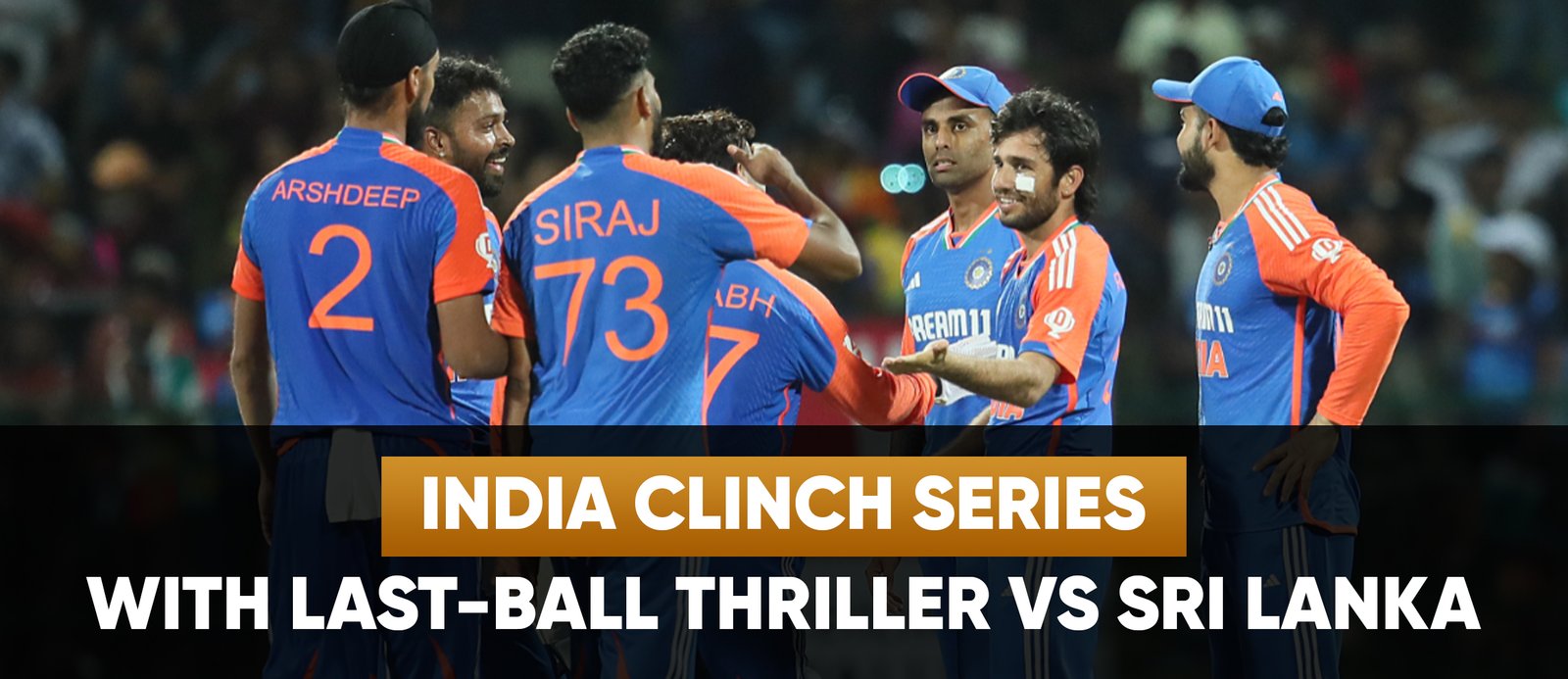
India Clinch Series with Last-Ball Thriller vs Sri Lanka
• 01 Aug, 24 • by Champ11In a match that will definitely be remembered for a long time of T20 cricket, India completed a stunning 3-0 whitewash over Sri Lanka, clinching the series
-

Most dismissals in ICC Men’s T20 World Cup
• 25 Apr, 24 • by Champ11When it comes to wicketkeepers in the ICC Men's T20 World Cup, some names consistently stand out for their ability to dismiss batsmen. These wicketkeepers combine sharp reflexes behind the stumps with quick catches to put pressure on the opposing team. Let's look at the top wicketkeepers based on the total number of dismissals they've achieved in the tournament's: